If you wonder whether libraries still matter, the role of libraries in society is simple: they give everyone free access to knowledge, learning and shared space. Here is what that looks like in practice, and why it still counts.
This guide belongs to the wider subject of literature and society.
| Item | Value |
|---|---|
| Ontarians visiting public libraries each year | More than 5 million people |
| Public library systems represented by the Federation of Ontario Public Libraries | 400+ systems |
| Branches across those systems | Exceeding 1,000 branches |
| American Library Association report on library value | Released in 2025 |
| Right to Read Act reintroduced in the US Congress | 2025 |
The Ontario figures come from the Federation of Ontario Public Libraries and the US items from a PressReader post. Figures can change, so check the source before you rely on them.
What is the role of libraries in society?
The short answer is free access. PressReader, a company that supplies digital content to libraries, says libraries ensure everyone has free, equitable access to knowledge, literacy skills, digital tools and lifelong learning, regardless of background or resources. ArchDaily describes them as gateways to knowledge and culture.
In practice, that single idea splits into several jobs:
- Supporting literacy and education at every age.
- Providing books, internet access and digital tools to people who might lack them.
- Keeping an authentic record of knowledge and local heritage.
- Offering a safe, shared public space.
- Helping people find work, settle in a new place and reach public services.
To see the scale, take Ontario. As of the Federation of Ontario Public Libraries (FOPL) page dated June 2026, more than 5 million Ontarians make hundreds of millions of in-person and online visits to their public libraries each year, and FOPL represents 400+ library systems with over 1,000 branches (FOPL).
FOPL is an advocacy body for libraries, so read its claims as the sector’s own case. They are still a useful picture of how many roles one institution can hold.
Free access to information and learning
Education is the role most people think of first. ArchDaily lists books, internet access, printing facilities and educational and professional training programs among the resources libraries provide, and notes that many libraries added e-learning after the pandemic to widen access.
That matters because cost is a real barrier. ArchDaily points out that not every student can afford every book or journal their studies require, so they rely on a library to keep up.
PressReader makes a similar point about information more broadly: libraries offer books, databases and digital platforms, which is especially important for people without internet access or the money to buy books (PressReader). Its post also links literacy to wider outcomes, saying illiteracy correlates closely with poverty, unemployment, lack of opportunities and gender inequity.
FOPL describes learning support across a lifetime, not just in childhood:
- Early literacy programs for children and families that build reading readiness.
- Research and homework help for students.
- Adult distance education and homeschooling support.
- Free computers, internet connectivity, technology training and one-on-one assistance that help bridge digital divides.
Sources for these points include FOPL’s advocacy page, which is a statement of what its members offer rather than an independent audit.
Libraries as social infrastructure
A library is also a place, and that is where much of its social value sits. In a 2019 blog post, Tiago Forte draws on Eric Klinenberg’s work to describe social infrastructure as the physical spaces in which people have direct, face-to-face interaction (Forte Labs).
He separates it from social capital. Social capital measures the strength of people’s networks, while social infrastructure is the physical conditions that decide how much of it develops, and design matters because the mere existence of public spaces does not guarantee it.
PressReader’s post notes that Klinenberg’s Palaces for the People, a bestselling 2019 book, argues the public library has the greatest potential for connecting people among spaces such as schools, parks and playgrounds (PressReader).
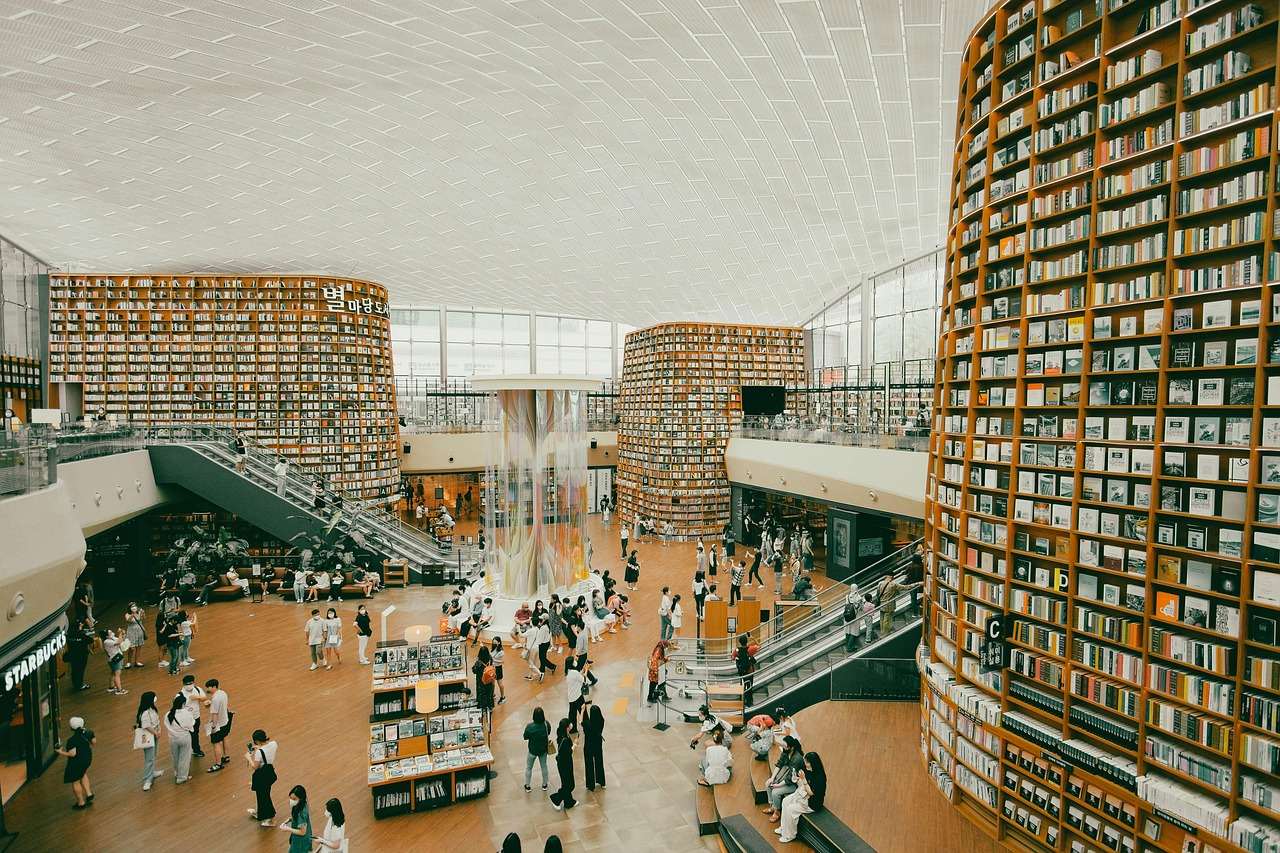
ArchDaily gives everyday examples of how that looks. Libraries become a social hub where different groups meet:
- Students gather in study groups for school projects.
- Parents and babies join story-time clubs.
- Older people attend events that encourage connection.
- Avid readers discuss their latest book with like-minded people.
The same article adds that libraries support non-English speakers who are integrating into a community, with collections in different languages and often multilingual staff. Forte writes that libraries help build friendships and support networks among neighbors who might never otherwise meet.
Jobs, newcomers and local economies
Libraries are free to use, so their economic role is easy to overlook. ArchDaily says they provide workspace for telecommuters, free internet for people searching for jobs, and job and interview training for those who need it.
FOPL lists several related services, each described as practical support for residents:
- Business information and market research for small businesses and entrepreneurs.
- Settlement support, language learning and accreditation assistance for newcomers to Canada.
- Technology infrastructure and professional help for reaching e-government services.
FOPL also claims that many studies show public investment in libraries delivers measurable returns, through economic benefits, stronger communities and a greater ability to attract businesses and residents (FOPL). Its page does not give the studies here, so treat that as a claim to check rather than a settled figure.
There is a limit worth stating plainly. ArchDaily says libraries are not substitutes for shelters, counseling centers or long-term solutions to homelessness, yet they remain vital to public health and safety by offering support to people in need.
Trust, truth and cultural memory
Libraries also hold a society’s records. ArchDaily says they help ensure an authentic record of knowledge created by past generations, and that they are rich repositories of historic and cultural collections, many not available elsewhere in the world.
The same article calls libraries important defenders in the fight against misinformation. If you want the longer story of how written knowledge reached more readers in the first place, the history of the printing press covers that earlier chapter.
Trust is part of this role. In his 2019 post, Forte writes that librarians have stayed a neutral party in an age of weaponized information, trusted by the public more than any profession except nurses. That is the blogger’s claim from his reading, not a survey result presented in the source.
Forte’s summary of Klinenberg’s ideas lists five pillars of the library’s role:
- Protecting free speech and truth.
- Providing space for intellectual exploration, a place that is safe not only physically but also intellectually.
- Helping people improve themselves, on the assumption that the library “assumes the best out of people”.
- Developing young people, since libraries are among the few public spaces where children can still roam under adult supervision.
- Serving everyone.
Fiction has long explored what happens when information is controlled, a theme covered in dystopian fiction and society. Seen that way, an open library is the everyday counterpart of those warnings.
Why the case for libraries is still being made
Support for libraries is not automatic. PressReader reports that when the American Library Association (ALA) released its 2025 report, president Sam Helmick said libraries had become sources not only for books but for everything from telemedicine to workforce development to places of safe harbor.
She urged voters and policymakers to remember that value, saying that libraries are not optional (PressReader, post dated October 2026).
The same post says Sen. Jack Reed reintroduced the Right to Read Act in 2025, with a House counterpart. If passed into law, it would ensure every student has access to an effective school library staffed by a certified school librarian and provide funding for school libraries. As of that October 2026 post, it is described as a proposal, so do not assume it has passed.
The ALA president frames it as a choice: libraries can be left to fade as charming relics of a bygone era, or be treated as the bedrock of the future. Keep in mind that this is an advocate’s argument, so weigh it alongside the other sources here.
Frequently asked questions
What is the main role of a library in society?
Show answer
According to the sources used here, it is to give everyone free, equitable access to knowledge, literacy skills, digital tools and lifelong learning. Many libraries also act as safe community spaces and keep records of local and cultural heritage.
Are libraries still needed now that so much is online?
Show answer
The sources say yes. ArchDaily notes libraries added e-learning after the pandemic, PressReader stresses people who lack internet access, and FOPL lists free computers, connectivity and one-on-one technology help.
What does “social infrastructure” mean?
Show answer
It means the physical spaces where people interact face to face, such as schools, parks and libraries. Forte, summarizing Klinenberg, says these conditions shape how strong or weak social ties become.
How do libraries help people new to a country?
Show answer
FOPL lists settlement support, language learning, accreditation assistance, employment resources and chances to keep cultural connections. ArchDaily adds that libraries may stock books in different languages and employ multilingual staff.
Can a library replace a shelter or counseling service?
Show answer
No. ArchDaily states libraries are not substitutes for shelters, counseling centers or long-term solutions to homelessness, although they offer support and a safe place to people in need.