Nobel Prize in Literature winners can feel like an endless list, and you may not know where to start. Begin with a few laureates, from Tagore in 1913 to Han Kang in 2024, and the books behind their prizes.
The prize is one thread in the wider story of literature and society, and the winners below show how that thread has stretched over time.
| Item | Value |
|---|---|
| First laureate | Sully Prudhomme, France, 1901 |
| First non-European laureate | Rabindranath Tagore, 1913 |
| Nomination proposals must arrive by | 1 February |
| Annual award ceremony in Stockholm | 10 December |
| Prize money for the 2024 award | 11 million Swedish kronor |
| Most recent winner covered here | László Krasznahorkai, 2025 |
Figures come from Wikipedia’s list of laureates and an Al Jazeera report from October 2024. Prize amounts and counts can change, so check the source before you rely on them.
How the prize works
The prize comes from the 1895 will of Alfred Nobel, as the list of laureates notes. The Swedish Academy decides who, if anyone, receives it, according to Wikipedia’s entry on the prize.
The first winner, in 1901, was the French poet Sully Prudhomme. His citation praised a “poetic composition, which gives evidence of lofty idealism, artistic perfection, and a rare combination” of heart and intellect. The Wikipedia entry notes that in the 1920s “idealistic direction” was interpreted more generously as “wide-hearted humanity”, leading to awards for writers like Anatole France, George Bernard Shaw and Thomas Mann. That shift is one reason the winners’ list looks so varied today.
Each year the Academy sends out requests for nominations, and proposals must reach it by 1 February. Nobody can nominate themselves. Wikipedia’s entry adds that no one can get the prize without being on the shortlist at least twice, so strong candidates are reviewed again and again.
A laureate receives three things:
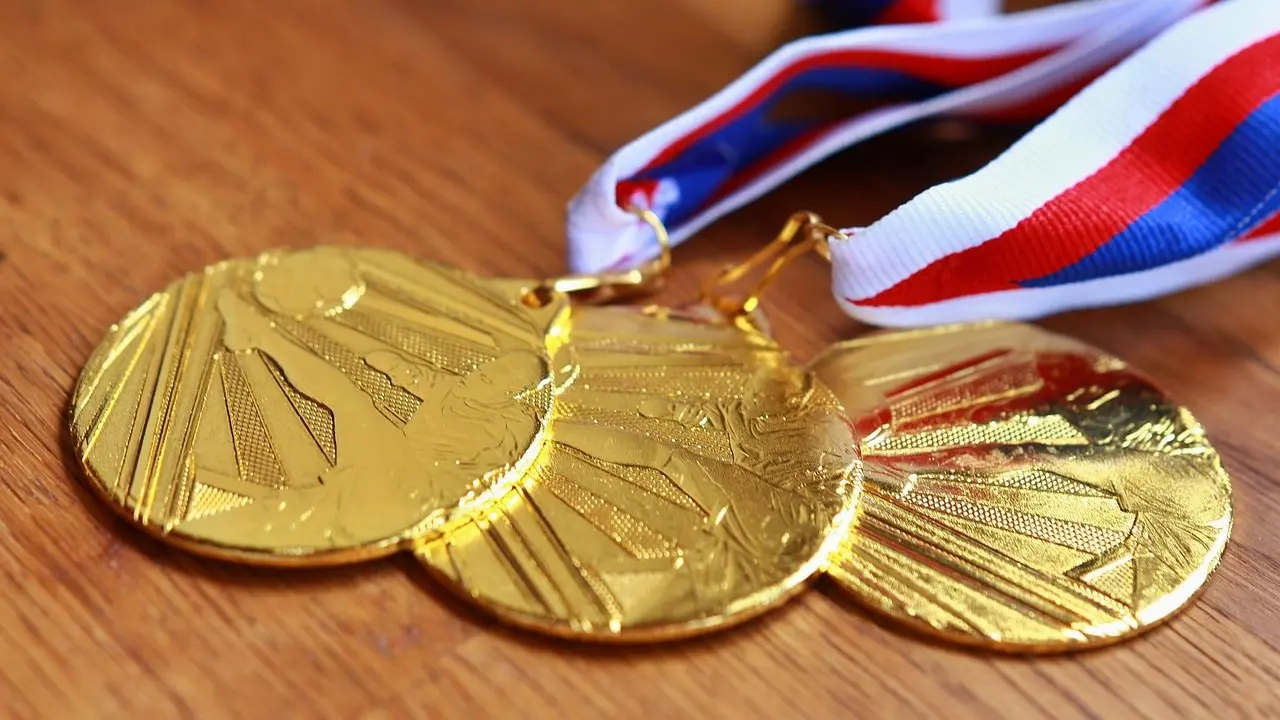
- a gold medal;
- a diploma bearing a citation;
- a sum of money that depends on the Nobel Foundation’s income that year.
The award is presented in Stockholm on 10 December, the anniversary of Nobel’s death. The prize can be shared between two laureates, but not three, and that has happened on four occasions.
Winners who widened the prize’s map
Rabindranath Tagore won in 1913, and the Academy of American Poets notes that his Gitanjali: Song Offerings (Macmillan, 1912) was the work for which he received the prize. Wikipedia describes him as the first non-European to receive a Nobel Prize in Literature. His citation singled out his “profoundly sensitive, fresh and beautiful verse”, which is a good reason to read the English Gitanjali before anything else of his; see the Academy of American Poets biography for his bibliography.
Wole Soyinka followed in 1986 and became the first African laureate, as his Wikipedia biography records. The Academy honoured his “wide cultural perspective and poetic overtones fashioning the drama of existence”. A natural way in is his play Death and the King’s Horseman, which he wrote during a year as a visiting fellow at Churchill College, Cambridge.
Gabriel García Márquez won in 1982 “for his novels and short stories, in which the fantastic and the realistic are combined in a richly composed world of imagination, reflecting a continent’s life and conflicts”. According to Wikipedia, his best-known novel, One Hundred Years of Solitude (1967), has sold over fifty million copies worldwide. It is the usual first stop for readers new to Latin American fiction.

American winners: Hemingway, Morrison and Dylan
Ernest Hemingway won in 1954 “for his mastery of the art of narrative, most recently demonstrated in The Old Man and the Sea”, per the list of laureates. That short novel is the obvious starting point, because the citation names it directly.
Toni Morrison received the prize in 1993 “who in novels characterized by visionary force and poetic import, gives life to an essential aspect of American reality”. Her Wikipedia biography calls Beloved, published in 1987, her most celebrated novel. It won the Pulitzer Prize in 1988 and was made into a film in 1998.
Bob Dylan won in 2016 “for having created new poetic expressions within the great American song tradition”. Wikipedia’s Dylan entry quotes a commentator saying he was the first musician to win the award. His Nobel lecture was delivered on 4 June 2017.
If you want to place these writers in a wider American picture, our guide to harlem renaissance writers covers another strand of twentieth-century American writing.
Recent winners: Han Kang and László Krasznahorkai
Han Kang won in 2024 “for her intense poetic prose that confronts historical traumas and exposes the fragility of human life”. Al Jazeera’s October 2024 report said Han, 53, was the first South Korean writer and the 18th woman to win. The report adds that her major international breakthrough came in 2007 with the novel The Vegetarian.
The Academy said she “has a unique awareness of the connections between body and soul, the living and the dead”. The same report gives the prize as 11 million Swedish kronor, about $1m at the time.
The Hungarian writer László Krasznahorkai won in 2025. NPR’s report of 9 October 2025 says the committee honoured him “for his compelling and visionary oeuvre that, in the midst of apocalyptic terror, reaffirms the power of art”. He is known for novels and novellas such as Satantango, his first novel, which came out in 1985, and The Melancholy of Resistance.
How to read laureates without getting lost
You do not need to read in prize order. These steps keep it manageable:
- Read the citation first, because it tells you what the Academy thought the writer did best.
- Pick the book the citation or biography points to, such as The Old Man and the Sea or Satantango.
- Choose a good translation if the writer worked in another language. The Academy itself calls on translators and oath-sworn experts when a shortlisted writer’s language is one that no member masters.
- Move sideways to another laureate from the same region or era once you have finished.
Keep a short list of what struck you in each book. Comparing a poet such as Tagore with a novelist such as Morrison, or a playwright such as Soyinka with a songwriter such as Dylan, shows how widely the Academy has defined literature.
It also helps to remember that prizes depend on books reaching readers. The history of the printing press is a useful background read on how that began.
Frequently asked questions
Has anyone turned the prize down?
Show answer
Wikipedia’s entry on the prize says three writers declined it: Erik Axel Karlfeldt in 1919, Boris Pasternak in 1958 and Jean-Paul Sartre in 1964. In Pasternak’s case, the Nobel Foundation says he accepted first and was later caused by the authorities of his country to decline.
Who was the first winner?
Show answer
The French poet Sully Prudhomme was the first person to be awarded the Nobel Prize in Literature, in 1901, according to Wikipedia’s entry on the prize.
Can two people share the prize?
Show answer
Yes, up to two. The entry says the prize can be shared between two, but not three, laureates, and that it has been shared between two individuals on four occasions.
Which laureate should you read first?
Show answer
Pick the book named in the citation. Hemingway’s The Old Man and the Sea, Morrison’s Beloved and García Márquez’s One Hundred Years of Solitude are the best-known entry points among the writers above.