Wondering how literature and society connect? Books shape what you and your neighbours can imagine and argue about, and societies shape which books get written, published and read. The links run both ways.
| Item | Value |
|---|---|
| Book bans recorded in US public schools since 2021 | Around 16,000 bans |
| Banned books on the Taliban’s published list, October 2024 | Over 400 books |
| Books banned in Malaysia in early 2025 | At least nine books |
| UNESCO’s World Book and Copyright Day | 23 April, established in 1995 |
| Earliest recorded book ban, per Harvard Library | Since at least 1637 |
These figures come from PEN International’s World Book Day 2025 statement and Wikipedia’s overview of book censorship. Counts of bans change as new cases are recorded, so check the sources before you rely on them.
How does literature shape society?
Literature is the place where a society talks to itself. Novels, poems, plays and essays let you step into lives you will never live, and that habit has public effects. A joint statement from groups of authors, publishers, booksellers and libraries says that through writers’ work “we understand our societies, build empathy, overcome our prejudices and reflect on provocative ideas”, as published by PEN International in March 2024.
The influence shows up in several distinct ways:
- Empathy: a story makes a stranger’s point of view feel real, which is hard to do with a statistic.
- Memory: books record what communities lived through, including things authorities would rather forget.
- Debate: in the words of PEN International’s Executive Director, societies where reading and publishing thrive let diverse voices contribute to public discourse, fostering informed debate, critical thinking and civic engagement.
- Language: the words a culture has available decide what it finds easy, or hard, to say out loud.
The American Library Association’s Freedom to Read Statement, reproduced in a college library guide, makes the same point about new ideas. It calls the written word “the natural medium for the new idea and the untried voice from which come the original contributions to social growth.”
The influence also runs the other way. Schools, laws, markets, religions and governments all shape which stories reach readers, and when those pressures harden into bans the effect becomes easy to see. PEN International’s president, Burhan Sonmez, describes books as “powerful forces capable of reshaping dominant narratives and resisting oppression”, which is exactly why some authorities try to control them; his words appear in PEN International’s April 2025 statement.
Start with the literature guide if you want the wider map of the field. Turn to writing and language basics for the craft behind the words.
Why have books always been contested?
Arguments over what people may read are very old. Wikipedia’s overview of book censorship cites Harvard Library for the earliest recorded ban, which it places at 1637 at the latest. Treat that date as a floor rather than a starting line, because the same overview says censorship reaches back before printing, to the age of manuscripts and codices.
Burning is older still. The overview describes book burning as one of the original forms of censorship, dating back to 213 BCE, and notes that it has usually been carried out in public as a signal of moral, religious or political objection.
The history of the printing press covers the technology side of that story. Censorship tends to follow whatever technology moves words around.
Wikipedia’s overview lists the reasons given for banning books. They fall into a few families:
- Age and decency: books are most often censored for age appropriateness, offensive language or sexual content.
- Obscenity: censorship of literature on the charge of obscenity appears to have begun in the mid-19th century.
- Politics: governments have sought to ban books that they see as threatening, embarrassing or critical of them.
- Religion: religions may issue lists of banned books, such as the Catholic Church’s Index Librorum Prohibitorum.
These families overlap in real cases. A book can be challenged for language by one group and for its politics by another, and the stated reason is not always the real one. The Wikipedia overview adds that censors are often concerned parents, community members who react to a text without reading it, or local and national organisations, and that bans can be enacted nationally or locally and can carry legal penalties.
Some examples show how political the choices can be. The Soviet Union banned two of George Orwell’s novels, Animal Farm and 1984, for their critique of totalitarianism. Leo Tolstoy’s The Kingdom of God Is Within You was banned in the Russian Empire for being anti-establishment.
Destruction has a long record as well. Nazi Germany burned works of Jewish authors and other works considered “un-German”, and Chilean soldiers burned books they considered politically subversive in 1973, under Augusto Pinochet’s dictatorship.
Bans also have a habit of backfiring. The same Wikipedia overview notes that banning a book often entices people to seek it out, which can make the work more popular rather than less.
For a fuller chronology of the fights over particular titles, see banned books history. The thread through all of it is simple: whoever controls what circulates controls part of what a society can think about.
Who decides what you can read?
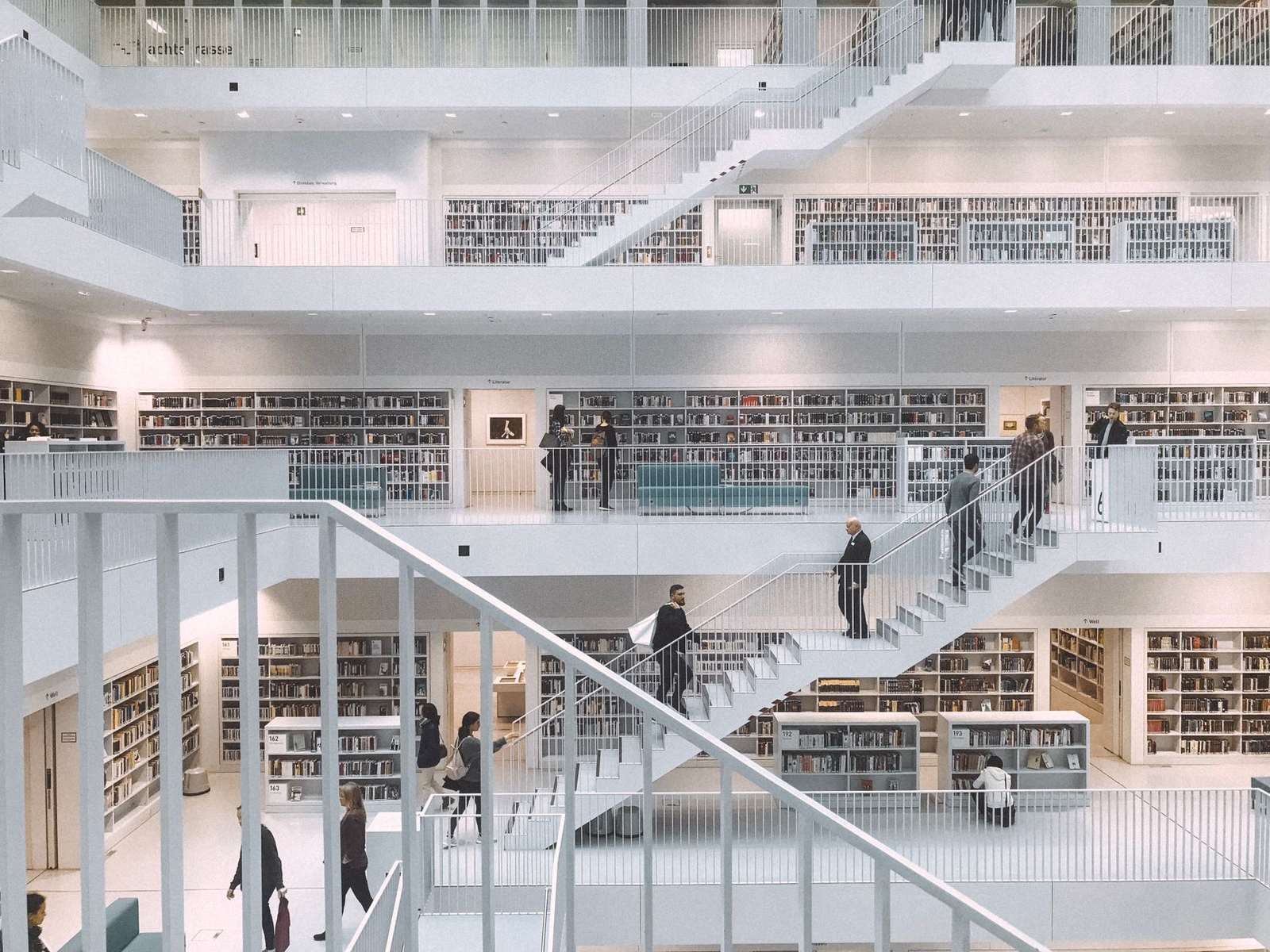
In practice, a chain of people stands between a writer and you: authors, publishers, booksellers and librarians. The 2024 joint statement on the freedoms to express, publish and read was issued by five organisations representing these groups. It was launched on 14 March 2024 at London Book Fair, according to PEN International’s announcement.
The statement argues that each link in the chain needs freedom to work. Publishers must be free to publish works they believe important, including those that are unorthodox, unpopular or considered offensive by some. Booksellers and librarians must be free to present the full range of works, without having that freedom constrained by governments, local authorities or groups imposing their own tastes.
Freedom here does not mean endorsement. As the statement puts it, publishers, librarians and booksellers do not necessarily endorse every work they make available.
Libraries as guardians of access
Libraries sit at the centre of this debate because they put the principle into daily practice. The American Library Association’s Library Bill of Rights, adopted on 19 June 1939 and reproduced in a college library guide, says libraries should provide materials presenting all points of view on current and historical issues. It adds that libraries should challenge censorship in fulfilling their responsibility to provide information and enlightenment.
The role of libraries in society goes well beyond lending books. It includes protecting readers’ privacy and keeping collections open to people of every background.
Rights, limits and responsibilities
Free expression is protected in international law. Article 19 of the Universal Declaration of Human Rights (1948) says everyone has the right to freedom of opinion and expression, including the freedom to seek, receive and impart information and ideas through any media and regardless of frontiers, a text quoted in PEN International’s background notes.
The joint statement is also careful about limits. It says unrestrained communication is essential to a free society but carries the responsibility to resist hate speech, deliberate falsehoods and distortion of facts. It warns, too, that the risk of self-censorship under social, political or economic pressure remains high, affecting every part of the chain from writer to reader.
The fight is not new. The same page notes that in June 2023 the American Booksellers Association, American Library Association, Association of American Publishers and Authors Guild re-published a joint statement on the Freedom to Read first issued in 1953, as part of their work to resist a wave of book bans in the USA.
What do book bans look like around the world today?
PEN International reported a dramatic increase in book bans, censorship and persecution of authors worldwide in its statement of 23 April 2025. It tied the trend to restrictions on books addressing sexual violence, LGBTQ narratives and race, which it says disproportionately affect marginalised communities. The examples below come from that statement, and each reflects the situation as PEN described it in April 2025.
- Afghanistan: in October 2024 the Taliban’s Ministry of Information and Culture published a list of over 400 banned books seized from markets, libraries and booksellers.
- Argentina: in 2024 officials and groups linked to President Javier Milei’s supporters campaigned to remove books on feminicide and sexual abuse from schools and bookshops. All the targeted books were written by women.
- Equatorial Guinea: writer Trifonia Melibea Obono Ntutumu has faced ongoing intimidation and harassment, and her novel La Bastarda remained banned.
- Malaysia: authorities banned at least nine books in early 2025 as “undesirable publications”.
- Mali: non-fiction author Étienne Fakaba Sissoko was arrested in March 2024 over a book criticising the military government’s communication.
- Türkiye: in July 2024 the storytelling platform Wattpad was among those blocked by court orders.
In the United States, PEN International cites PEN America for around 16,000 book bans recorded in public schools since 2021. It calls this a level of censorship not seen since the McCarthy era. Most targeted books address race, racism, LGBTQ+ issues or sexual violence, or make sexual references.
Titles banned in the 2023-2024 school year include Jodi Picoult’s Nineteen Minutes, John Green’s Looking for Alaska, Margaret Atwood’s The Handmaid’s Tale and Khaled Hosseini’s The Kite Runner.
That list includes a classic of the genre, and it is a reminder of why dystopian fiction and society so often end up in the same argument. Stories about censored or controlled worlds tend to be challenged by the people with the most power to control what is read.
What PEN International asks for
PEN International and its Centres urge authorities to take three steps:
- End book bans and uphold freedom of expression.
- Stop the persecution of authors, publishers, translators and educators for simply doing their work.
- Support the autonomy of libraries, publishers, schools and universities to curate collections free from political interference.
These are the demands of an advocacy group, so read them as one side of a debate. Even so, the joint statement of the five book-sector organisations lands in the same place: access to the widest range of books serves the public.
How do language and storytelling carry a culture?
Laws are only part of the picture. Language itself carries a culture, which is why some of the most serious attacks on books are really attacks on a way of speaking. PEN International’s statement notes that scores of Kurdish writers in Türkiye, including novelist Yavuz Ekinci, continued to be persecuted for promoting Kurdish language and culture.
Stories also travel without a printed page. The oral storytelling traditions of many cultures show that literature began as spoken memory, long before anyone argued about shelves. Writing then added a way to fix a story in place and send it to strangers.
Once stories cross borders, new questions arise about translation, canon and who gets to count as a writer. What is world literature takes up those questions and asks how works move between languages and readers.
Recognition matters too. A glance at the nobel prize in literature winners is one way to see which languages and regions a major prize has put in front of readers, and which it has not.
Communities have also used writing to define themselves in public. A good case study is the harlem renaissance writers, who show what happens when a group takes control of its own story.
A global day for books
One reminder of all this is annual. In 1995, UNESCO established 23 April as World Book and Copyright Day to honour William Shakespeare, Miguel de Cervantes and Inca Garcilaso de la Vega, who all died on that date. According to PEN International’s account, UNESCO recognises books as the most powerful tools for sharing and preserving knowledge, and says spreading them encourages understanding, tolerance and dialogue.
How can you read with society in mind?
You do not need special training to see the social side of a book. A few habits go a long way, and they work for a novel, a poem or a newspaper essay alike.
- Ask who is speaking. Notice the author’s position, the language they write in and the audience they seem to expect.
- Ask who made it possible. Publishers, translators, editors and booksellers all shape what reaches you.
- Ask what is missing. If a shelf only holds one kind of voice, the gap is itself information.
- Read what is challenged. A book that some group wants removed often shows you what that group is worried about.
- Use libraries. They are built to offer many points of view, which makes comparing them easy.
Reading what is challenged is not the same as agreeing with it. The joint statement says that access to writings should not be limited on the basis of the author’s personal history or political affiliations. It also says each person still carries responsibility for individual choices.
Reading widely is a way to practise that responsibility. It lets you judge a claim by weighing it against others, which is the habit the American Library Association’s statement describes when it says people need to know not only what they believe but why they believe it.
Frequently asked questions
What does “literature and society” mean?
Show answer
It describes the two-way relationship between written works and the communities that produce and read them. Books reflect and shape values, memories and debates, while laws, schools, markets and censors shape which books exist and circulate.
Does banning a book stop people from reading it?
Show answer
Not reliably. Wikipedia’s overview of book censorship notes that banning a book often entices people to seek it out, which can make the work more popular. Bans can still harm authors and cut off access for readers who have few other options.
When was the first recorded book ban?
Show answer
According to Harvard Library, as summarised on Wikipedia, books have been banned since at least 1637, the first time a ban was recorded. Book burning is described as older still, dating back to 213 BCE.
Why do libraries matter for free expression?
Show answer
Libraries make the freedom to read practical. The Library Bill of Rights says libraries should present all points of view and should challenge censorship, and the 2024 joint statement says librarians must be free to present the full range of works.
Are the ban figures in this guide final?
Show answer
No. They reflect the sources as dated in the text, mainly PEN International’s April 2025 statement. Check the linked sources for newer counts before you quote them.